
How to Check Criminal History in Schoharie County
Schoharie County has no single public rap-sheet portal. Start with the question the record must answer. WebCrims is the free first stop for available public criminal cases and appearance dates. The court clerk supplies filed documents and certified dispositions. An arrest report belongs to the arresting agency, while a booking record belongs to the Schoharie County Sheriff's Office when intake occurred at the county jail. A person reviewing a complete fingerprint-linked New York record must use DCJS Personal Record Review.
Gather the full name, date of birth, spelling variants, approximate event date, arresting agency, and any docket or incident number. These details matter because OCA court products use demographic matching, but DCJS uses fingerprints. A name match alone does not prove identity.
- Identify whether the target is an arrest report, booking record, court case, custody status, or personal rap sheet.
- Search WebCrims for a public pending case or calendar entry, using Schoharie as the county filter.
- Call the correct clerk or agency when a file is missing, old, sealed, or not published online.
- Request the underlying document from the court clerk, Sheriff Records Management, or the police agency that wrote it.
- Use DCJS fingerprint review when checking or correcting your own full New York criminal-history record.
WebCrims is strongest for current calendars and public case status. It does not replace a certified disposition. OCA CHRS can search open, pending, and conviction data reported by courts across all 62 counties, but it uses exact name and birth-date matching. If the spelling is wrong or a name has changed, the report may miss the case. The right final step is often a call to the clerk that holds the actual file.
Schoharie County Criminal Record Hubs
Local records are split between two places. The County Office Building at 284 Main Street in Schoharie holds the combined Supreme and County Court clerk. That counter is the right place for superior-court files, certified dispositions, and older filed documents. The Harvey E. Stoddard Public Safety Facility at 157 Steadman Way in Howes Cave houses the sheriff, jail, District Attorney, and Probation. Arrest reports, county booking records, current jail questions, and probation matters belong on that side of the system.
The County Clerk page shows the Supreme and County Court clerk route. The image below captures that official access point.
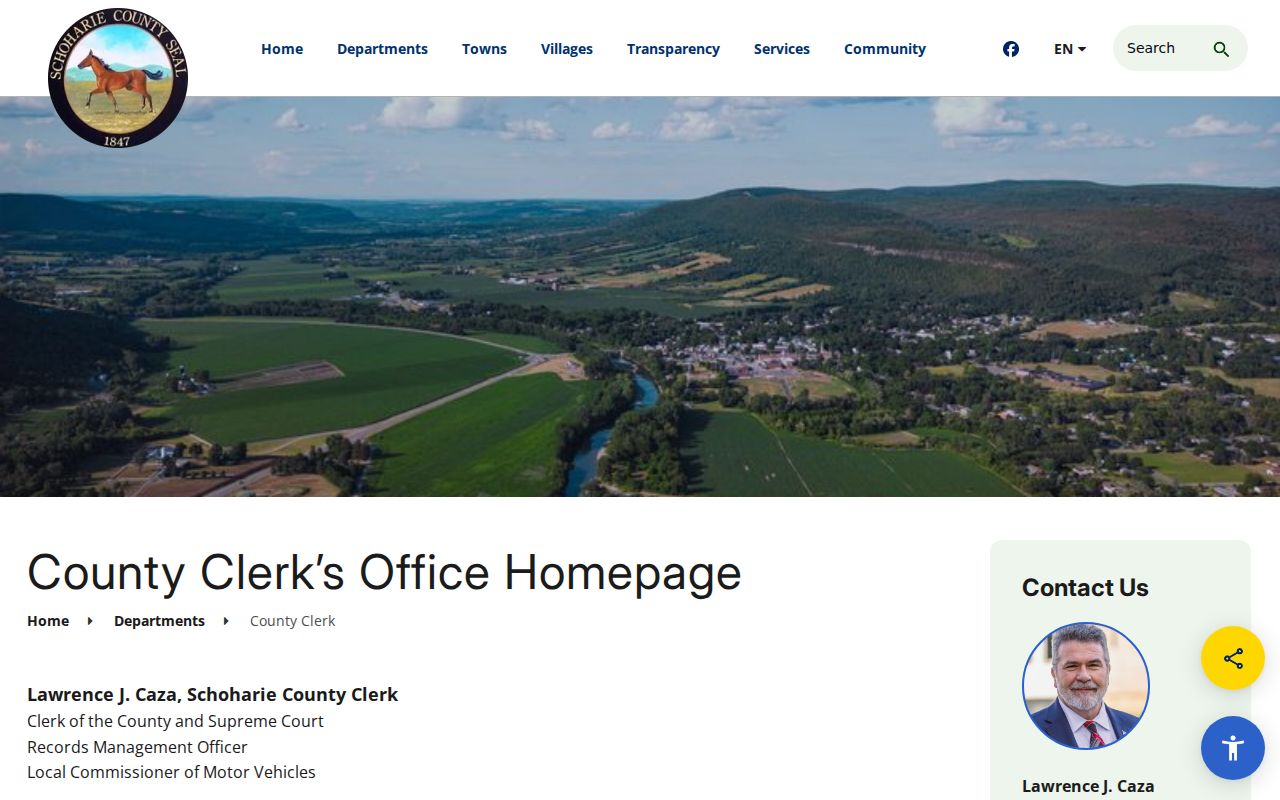
This split explains why a court document may be in Schoharie even when the arrest and booking took place through the Howes Cave facility.
Official New York Background Checks
The New York State Division of Criminal Justice Services, or DCJS, is the only source of an official New York criminal-history record. It does not offer a public name search for another person. A person or that person's attorney may request a fingerprint-matched Personal Record Review. Choose service code 15464Z for a suppressed response or 15465F for an unsuppressed response, then schedule fingerprint capture through IdentoGO by IDEMIA.
The DCJS and IDEMIA fee was $17.50 as of February 2, 2026, with a DCJS fee-waiver process for hardship. DCJS says the response is mailed and gives a three-to-four-week processing window. OCA CHRS is different. It is a $95 exact-name-and-date-of-birth search of public court data, not a fingerprint match and not a DCJS rap sheet.
Choose the product by purpose. DCJS self-review is the route for finding missing dispositions, checking whether a sealing order reached the repository, or seeing what identity-based record New York maintains about you. CHRS is a public court-data product and may require separate exact-match searches for name variants. WebCrims is a free case and appearance tool. None of the three replaces a certified document from the Schoharie County court that entered the judgment.
Schoharie County DCJS Record Review
Use the official IdentoGO enrollment system with the correct DCJS service code. No permanent Schoharie County enrollment center was confirmed, so let the scheduler show current mobile or nearby locations after the service code and ZIP are entered. Bring acceptable identification. DCJS supplies challenge instructions with the final response if an arrest cycle is incomplete or a disposition is wrong.
The enrollment image shows the designated scheduling path used for a Schoharie County personal record review.
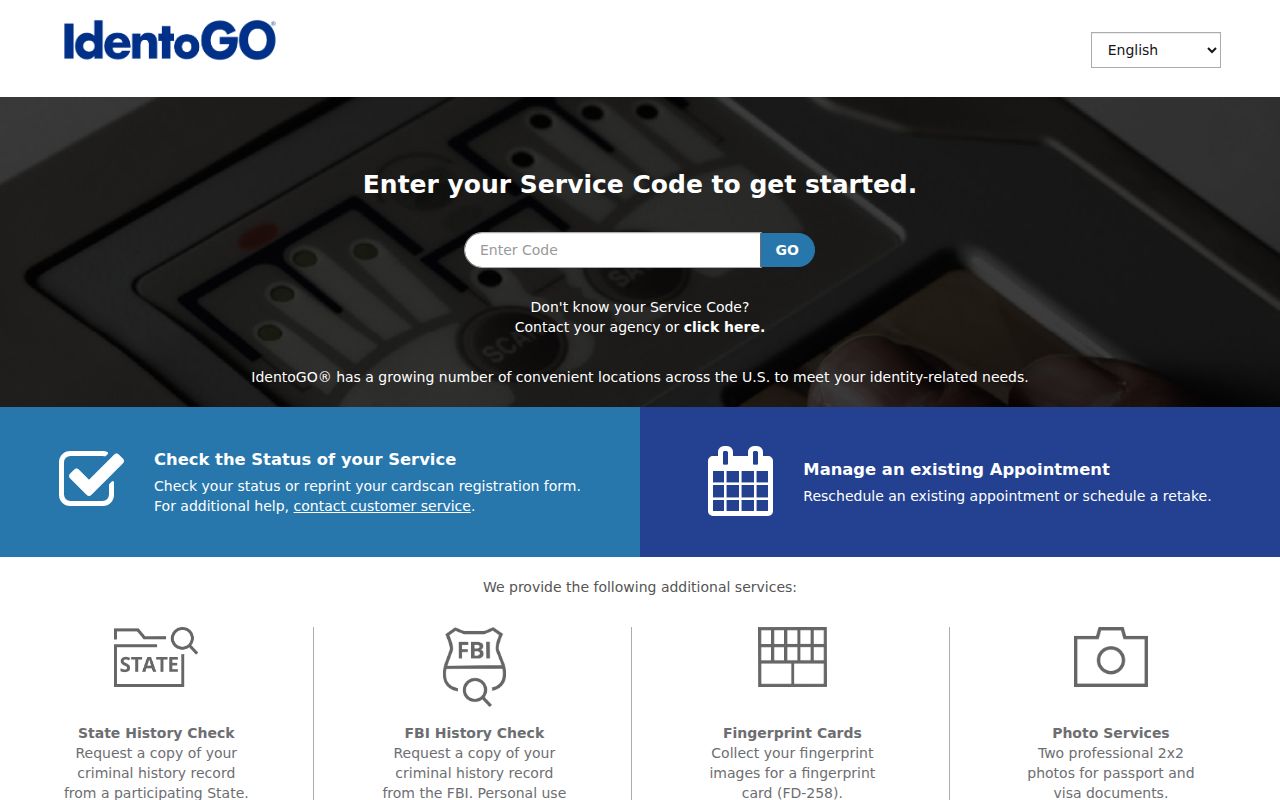
Fingerprint matching reduces false matches between people who share similar names and birth dates.
Types of Criminal Records
Schoharie County criminal records describe different stages of one event. A police incident report records the call and investigation. An arrest report states the officer's allegations and legal basis. The jail booking file tracks intake and custody. A court case file shows filed charges, appearances, pleas, motions, judgment, and sentence. DCJS later combines fingerprint-supported arrest cycles with reported prosecutor and court outcomes.
These records can disagree without any office being wrong. Intake charges may change after review by the District Attorney, and the final conviction may differ from both. Read each record in its proper stage.
Warrant, probation, parole, and registry records add more layers. A warrant starts with a court. County Probation supervises local sentences, while DOCCS manages parole. DCJS maintains the state Registry under separate disclosure rules. Each layer answers a different question.
- Arrest and incident records: request them from the sheriff, Cobleskill Police, State Police, or other agency that created the report.
- Booking and jail records: ask the Schoharie County Sheriff's Office and jail in Howes Cave.
- Criminal court files: use the County/Supreme clerk or the correct town or village justice court.
- State criminal history: obtain your own fingerprint-linked record from DCJS.
- Custody and supervision: separate county jail, DOCCS prison, county probation, and DOCCS parole records.
Schoharie County Jail Record Search
The county did not publish a searchable jail roster or daily booking log during the research pass. Call the jail at 518-295-2264 for current custody, giving the full name and date of birth. Use Sheriff Records Management and a focused FOIL request for written booking information. New York VINE may provide participating custody-status notices. DOCCS Incarcerated Lookup applies only after state commitment, not while someone remains in a county jail.
The official jail page describes the county correctional facility and its local custody role.
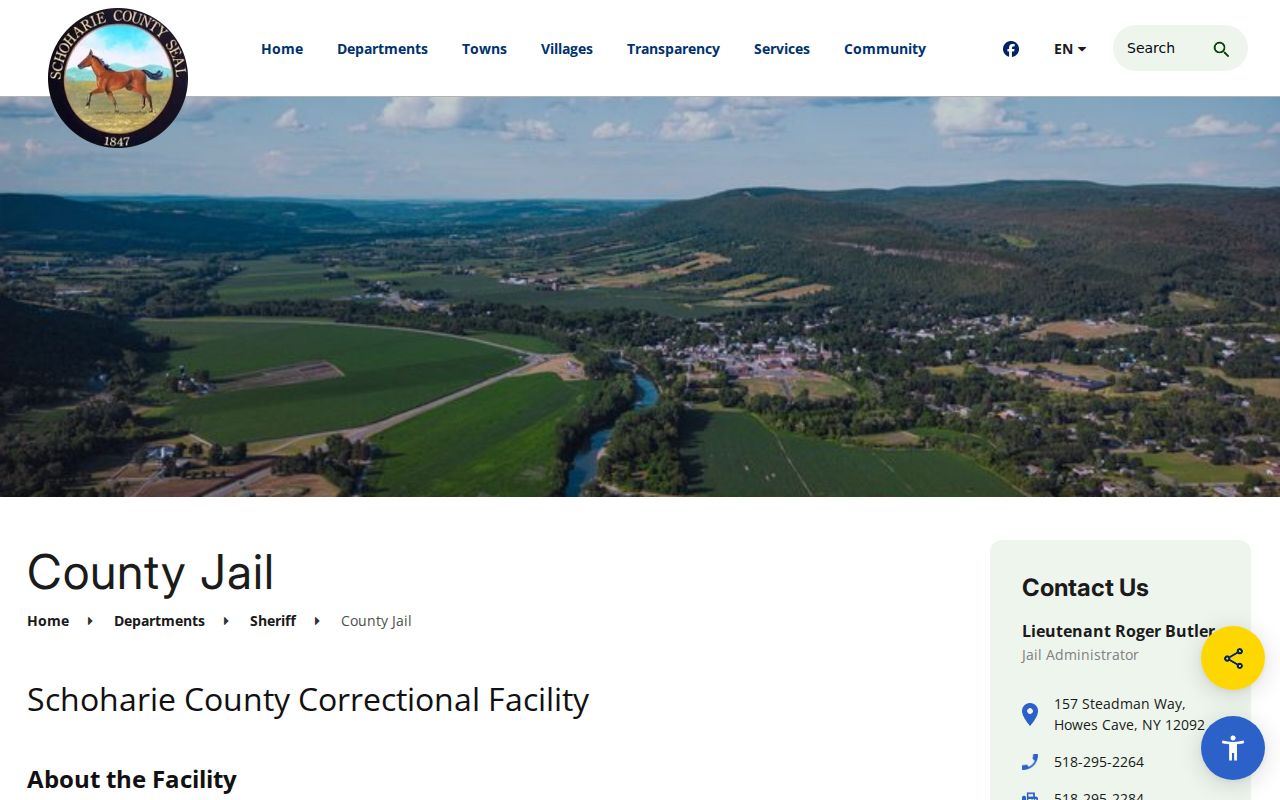
The Howes Cave jail has a maximum capacity of 69 and holds pretrial, sentenced, and boarded people, but it is not an online people-search service.
A missing county-jail result does not prove that no arrest occurred. The person may have been released after arraignment, transferred, held elsewhere, or never booked in Schoharie County. Follow the event into WebCrims or the arraigning court for the public case status. After a state-prison commitment, search the DOCCS locator by DIN, NYSID, or name. Federal custody instead belongs in the Bureau of Prisons locator.
What a Schoharie County Criminal Record Shows
A record's fields depend on its source. The DCJS rap sheet is identity-based and groups fingerprint-supported arrest cycles. The court file is case-based. The booking record is custody-based. The most reliable reading compares identifiers, charge dates, court numbers, and the final disposition rather than assuming that every screen describes the same moment.
Watch the labels. NYSID identifies a person within New York's criminal-history system, while a DIN identifies a DOCCS commitment. A docket or indictment number belongs to a court case. An incident or booking number belongs to an agency record. Using one number at the wrong counter can lead to a false dead end even when the underlying Schoharie County record exists.
| Name & Identifiers | Legal name, aliases, date of birth, NYSID, DIN, or case and booking identifiers where applicable. |
|---|---|
| Arrest / Booking Data | Agency, arrest date, received charges, fingerprints, intake, bail, transfer, and release fields. |
| Charges & Statutes | Alleged or filed offenses, statute citations, count, and class or degree when supplied. |
| Disposition | Pending, dismissed, acquitted, or convicted status for each filed charge. |
| Sentence | Jail, prison, probation, fine, restitution, or other terms ordered after conviction. |
| Custody / Supervision Status | County jail, DOCCS facility, release, probation, or parole data in the responsible system. |
Schoharie County FOIL Record Requests
When no portal exists, use the Sheriff's Records Management channel or the county FOIL form. Describe an existing record instead of asking the office to answer a question. Give an approximate date, place, involved agency, incident or booking number, and desired format. A request for a Cobleskill Police report goes to Cobleskill Police or the village, not to the county clerk.
The official Records Management page identifies the local fallback for sheriff-created records.
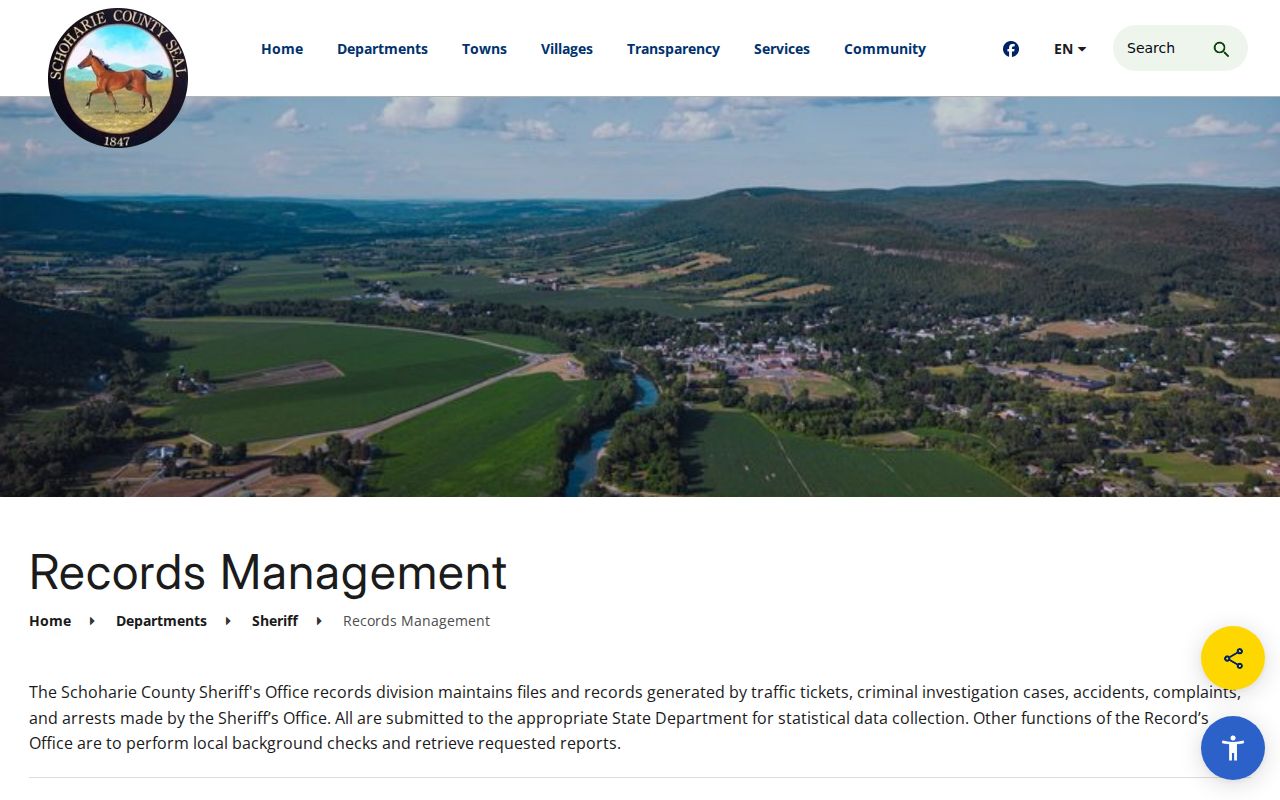
FOIL is free to submit. Standard paper copies and other media may carry charges allowed by law, but no local report-fee schedule was published in the inspected county sources.
Public Access Laws
New York law separates executive-agency records, court files, repository data, and sealed matters. FOIL applies to county and police agency records subject to exemptions. Court clerks provide public court records under court-access rules. DCJS may disclose criminal-history information only as authorized, so another person's rap sheet cannot be obtained through an ordinary public-record request.
Public Officers Law section 89 generally calls for an agency to grant or deny a request, or acknowledge it, within five business days. An acknowledgment may give a reasonable estimated completion date. An agency may redact material that would invade privacy, harm an active investigation, identify a confidential source, reveal protected methods, or conflict with another confidentiality law. A denial should identify the appeal route.
Key Statutes:
Public Officers Law Article 6 sets FOIL access, exemptions, response, copy, and appeal rules.
Executive Law § 837(8) governs DCJS criminal-history maintenance and authorized dissemination.
CPL § 160.50 directs sealing after a qualifying favorable termination.
Correction Law Article 6-C governs registry disclosure, risk levels, duration, and verification.
Schoharie County Sheriff Record History
The sheriff traces the office to 1795. Its modern records geography reflects Hurricane Irene. The old village jail was destroyed in August 2011, and Albany County boarded the committed population until the new Howes Cave facility opened. Schoharie County inmates returned in September 2020. That change moved correctional records away from the county seat while court files stayed in Schoharie.
The official Sheriff's Office page presents the current public-safety hub.
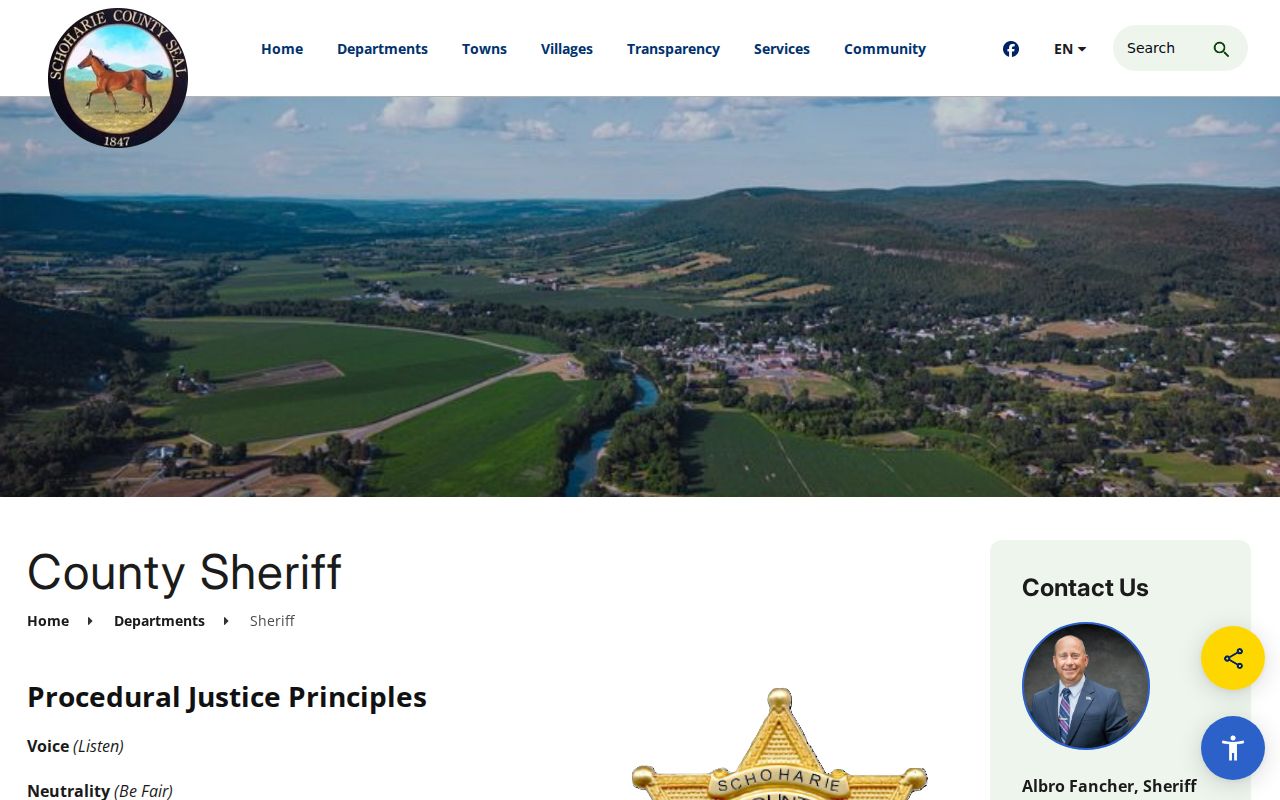
This history is practical, not decorative. It tells a records user which of the county's two physical hubs is likely to hold the requested file.
Sealed, Expunged & Restricted
New York uses record sealing rather than broad expungement. CPL 160.50 generally covers cases ended in the accused's favor. CPL 160.55 applies to specified violation outcomes. CPL 160.59 permits an application to seal up to two eligible convictions, with no more than one felony, after the statutory waiting period. Drug-treatment sealing, youthful-offender confidentiality, and Clean Slate rules create other paths.
File a CPL 160.59 request in the court that imposed the sentence. A Schoharie County or Supreme Court conviction routes to the clerk at 284 Main Street. A town or village conviction stays with that justice court. After an order is signed, use an unsuppressed DCJS review if needed to confirm that the sealing action reached the repository.
Clean Slate took effect in November 2024, and the court system has until November 2027 to finish implementation. Eligible misdemeanor and felony convictions seal only after the statutory crime-free period and completion of sentence. Sex offenses and non-drug Class A felonies are excluded. During implementation, a record that may later qualify can still appear, so a current DCJS self-review and a certified court disposition remain useful checks.
Schoharie County Warrant Record Limits
The county has no comprehensive public sheriff warrant portal. The Probation Department page publishes a small Wanted Probationers or Wanting Court table, but it represents only a narrow supervision subset. It is not a list of every bench, arrest, or superior-court warrant in Schoharie County. Ask the issuing court about your own case and speak with counsel before appearing.
The official probation image shows the office that manages county supervision and the limited public table.
The probation number for ordinary office contact is 518-295-2274. Its after-hours intervention line and the sheriff's confidential tip line are not records-request lines.
WebCrims or a CHRS exception may hint that a warrant affects an open case, but neither source guarantees real-time confirmation. Bench warrants often stay with the issuing town, village, or County Court. Sheriff Records Management may provide releasable information through FOIL, while sealed indictments, juvenile matters, youthful-offender cases, and active investigative details remain restricted. Never try to detain a person based on a record result.
Criminal Records by City in Schoharie County
Schoharie County has no incorporated cities, so the local guides cover its three largest incorporated villages. Cobleskill has a documented village police department. Middleburgh and Schoharie generally route law-enforcement reports to the sheriff or State Police, depending on who responded. Each village has distinct municipal and justice-court records, while felony cases can move to County Court.
Population rank comes from the 2020 Census: Cobleskill had 4,678 residents, Middleburgh 1,426, and the Village of Schoharie 922. The pages focus on local agency boundaries, not just place names. A Cobleskill postal address may fall in the town or on the SUNY campus, and the word Schoharie may refer to the village, town, or county. Confirm the actual jurisdiction before filing a request.
Cobleskill Criminal History
4,678 residents · Village Police, Justice Court, and county booking routes
Middleburgh Criminal History
1,426 residents · Sheriff or State Police reports and local court files
Schoharie Criminal History
922 residents · Village, town, and county records share the same place name
Schoharie County Village Record Routes
The official village sites help identify the right municipal clerk, but they are not one-stop criminal databases. The Village of Cobleskill site provides the local government route for the county's largest village.
Cobleskill Police writes village incidents, while SUNY Cobleskill University Police may hold campus reports and the sheriff or State Police covers areas outside village limits.
The Village of Middleburgh site is the source for village-created records and local contacts.
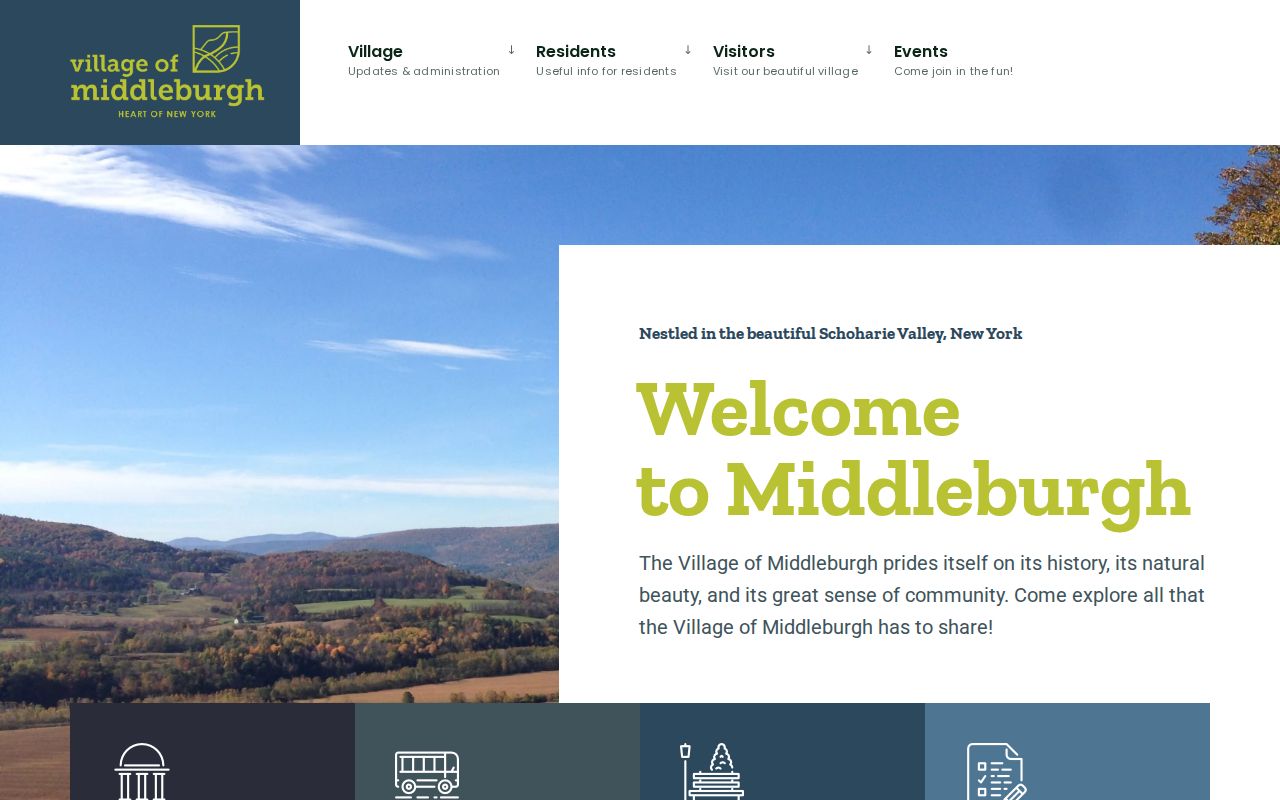
A sheriff or State Police report does not become a Village Hall record just because the event happened in Middleburgh.
The Village of Schoharie site shows the municipal route in the county seat.
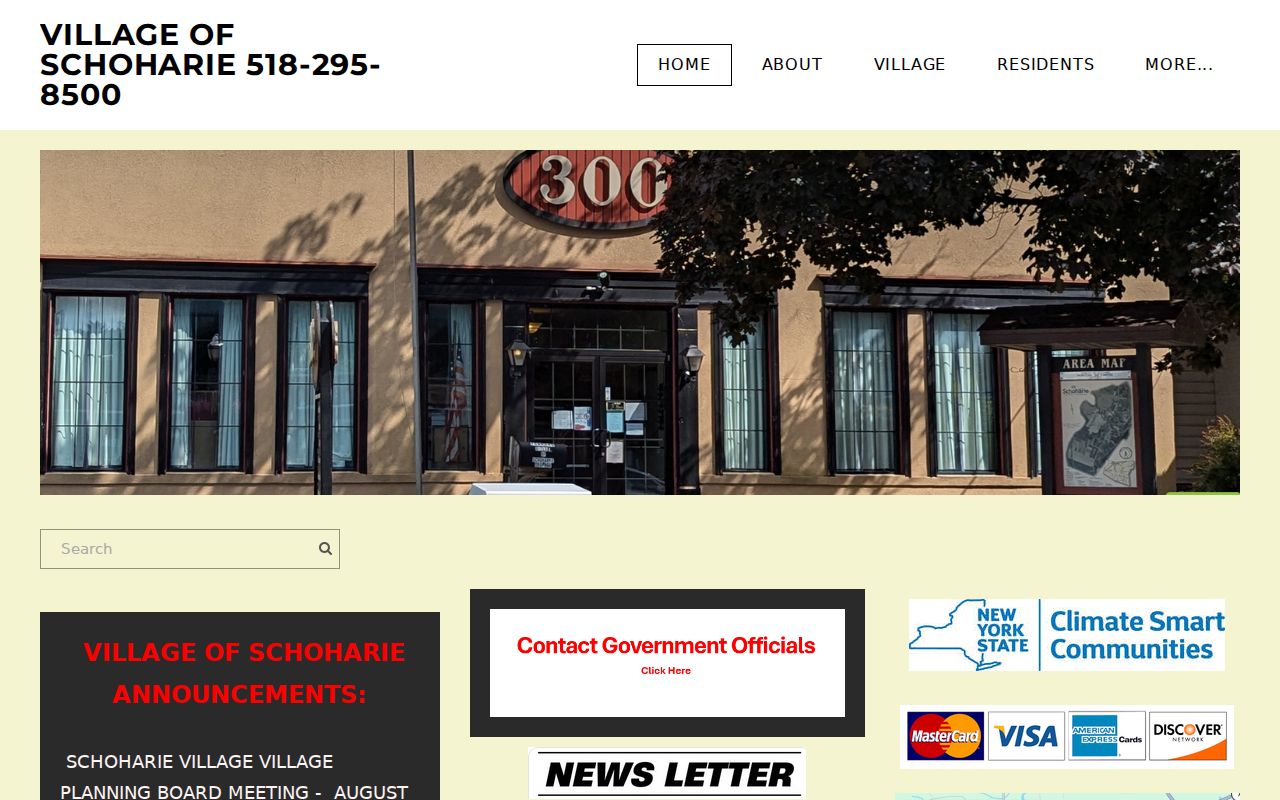
For court work, distinguish the local justice court from the combined County and Supreme Court clerk even though both operate in the same community.
Across all three villages, the same sequence prevents most wrong-counter requests: identify the responding agency, ask the jail about current county custody, find the arraigning justice court, and then check whether a felony moved to County Court. A village clerk holds village-created municipal records. The clerk does not automatically hold a sheriff narrative, State Police report, county booking file, or DCJS rap sheet.